
Department of Mathematics
Welcome from the Head of Department · Academic programmes, strategic partnerships, research and innovation · Malaria Modelling Workshop 2026
Welcome Message from the Head of Department
Welcome to the Department of Mathematics, Faculty of Science and Education, Busitema University, based at Nagongera Campus. Established in 2007, the Department began with three teaching staff: Mr. Jackson Okiring, Mr. Godfrey Engwau (the first Head of Department), and Dr. Asaph Muhumuza Keikara.
The Department now boasts 13 academic staff, comprising six female and seven male staff members. Seven hold PhDs, while one member is nearing completion of her doctoral studies. With this quality of staff, the Department and Faculty are well positioned to strengthen their research output.
Best regards,
Abubakar Mwasa, PhDHead of Department, MathematicsBusitema University
Academic Programmes
Bachelor of Science Education — Mathematics
The Department facilitates Mathematics courses under the Bachelor of Science Education programme. The Mathematics Major is intended for students wishing to take Mathematics as their main teaching subject, with the possibility of further graduate study. The Mathematics Minor is for students taking Mathematics as their second teaching subject. Both strands require a minimum number of credit units.
Master of Science in Industrial Mathematics (MIM)
Introduced in August 2016 as the first programme of its kind in Uganda, this two-year master's programme develops industrial researchers and innovators. It fosters collaboration between academia and industry and equips students with scientific computational skills and techniques applicable in modern industry. At least 20 students have graduated from the programme.
Bachelor of Science in Statistics
Launched in the 2023/2024 academic year with 17 students, the programme supports SDG 4, Uganda Vision 2040 and National Development Plans II and III. It emphasises practical learning and on-the-job training alongside statistical theory and methods.
Strategic Alliances and Research Networks
The Department has established partnerships to enhance teaching, research capacity and scholarly output.
HEI-ICI Partnership with Finland
The Master of Science in Industrial Mathematics programme grew out of collaboration between Busitema University and Lappeenranta University of Technology, Finland, under the Higher Education Institutions Institutional Cooperation Instrument (HEI-ICI). The project sought to strengthen sustainable institutional capacity and align higher education and research with societal development, national goals, inclusion and poverty reduction.
Sida-Funded Capacity Building
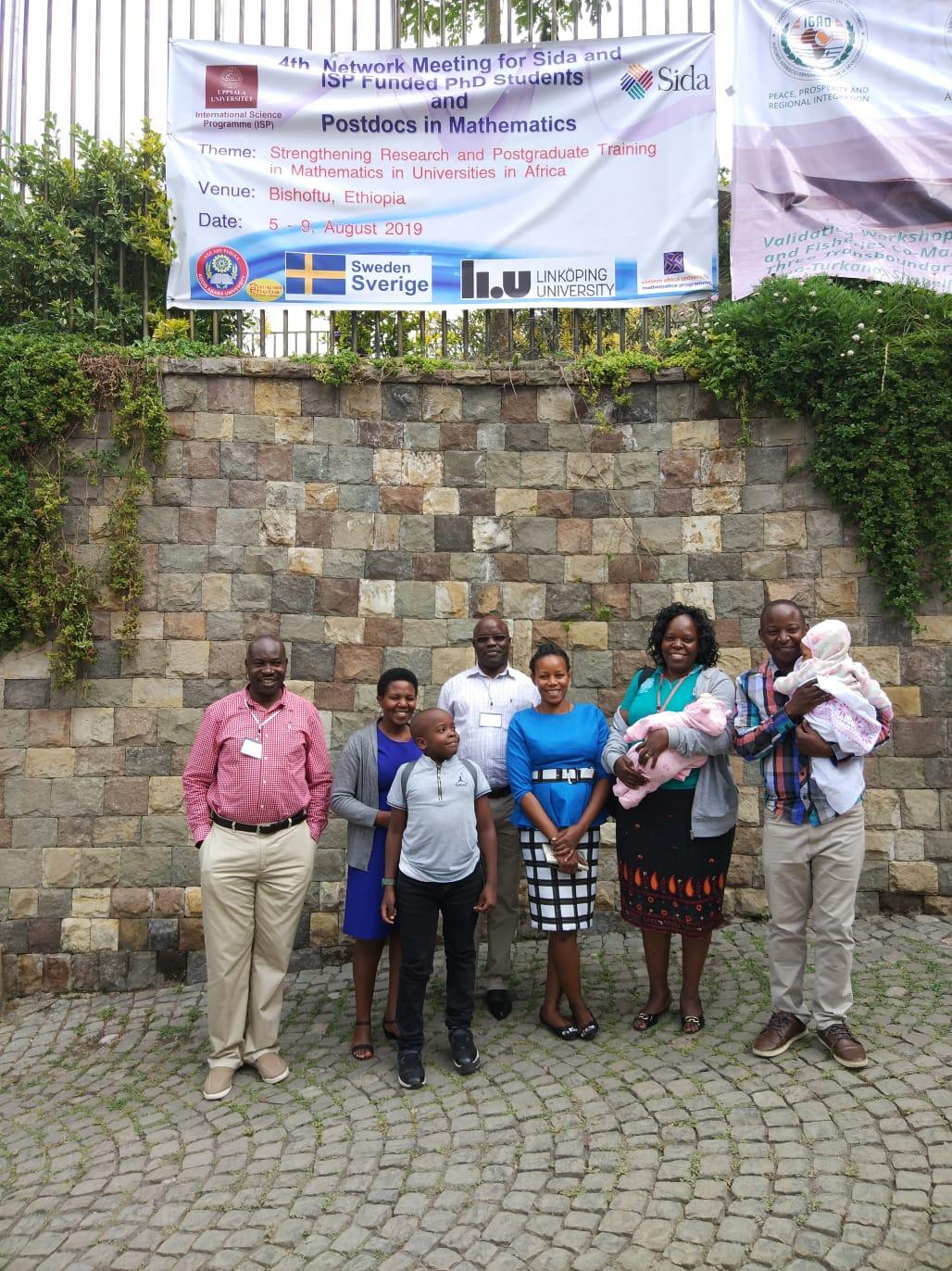
The Department participates in the Capacity Building in Mathematics and Applications in East Africa programme, coordinated by the International Science Program (ISP) and International Program in Mathematical Sciences (IPMS). The collaboration sponsored five departmental members for PhD studies.
Research Groups
The Department participates in Partial Differential Equations and Applications (PDE-APP), funded by ISP-IPMS, which promotes research and networking in East and Central Africa and beyond. PDE-APP has offered partial scholarships to two MIM students and supported research activities. Other groups include Applied Probability Research in East Africa (APREA), Combinatorial Research Studio (CoRS), East Africa Algebra Research Group (EAALG), and African Mathematics Seminar (AFMS).
The Department continues to seek collaboration with sister institutions and partners to apply Mathematics to societal needs.
Strategic Plan: 2024–2029
In line with the Faculty of Science and Education Strategic Plan, the Department proposes to expand undergraduate and graduate teaching through:
- MSc Mathematics (Pure and Applied Mathematics) and PhD in Mathematics by Research — submitted to the National Council for Higher Education (NCHE), according to the departmental document.
- Bachelor of Science in Economics and Statistics, with the Department of Economics and Entrepreneurship — in progress.
- BSc subject combinations: Mathematics/Physics, Mathematics/Chemistry, Mathematics/Computer, Mathematics/Statistics and Mathematics/Economics on a 3:2:1 basis.
Ongoing Research and Academic Development
The Department's research group responds to funding calls from the University and other sources. Departmental staff also engage in research and publication.
Effect of Time Delay on the Control of Banana Xanthomonas Wilt on Banana Production and Yield
The Department secured a University research grant for this mathematical research project.
A Delayed Fractional-Order Epidemic Model for Coronavirus Disease 2019 (COVID-19) with Saturated Incidence
Dr. Mbabazi Fulgensia and other mathematicians have worked on this research topic.
Developing New MSc & PhD in Mathematics
The project was supported by BURIF, with Dr. Asaph Keikara Muhumuza as Principal Investigator and Dr. Fulgensia Kamugisha Mbabazi as Co-Principal Investigator. The programmes were successfully developed and were reported as being under NCHE review for final accreditation.
Stakeholders' Consultative Workshop — 12 January 2023
A workshop on developing the new MSc and PhD programmes took place at St. Benedictine Fathers Retreat Centre, Tororo. It was officially opened by former First Deputy Vice Chancellor for Academic Affairs Prof. Samuel Baker Kucel. Assoc. Prof. Godwin Kakuba and Assoc. Prof. David Ssevviiri facilitated Applied and Pure Mathematics sessions respectively.
Attendees included Dr. Mwasa Abubakar (HoD and Host), Dr. Asaph Keikara Muhumuza (PI), Dr. Mbabazi Kamugusha Fulgensia (Co-PI and former Deputy Dean, FSE), Mr. Ndamanywa Kalisti (Grants Manager, DGSRI), Assoc. Prof. Andama Edward (former Dean, FSE), Assoc. Prof. Semwogerere Twaib (former Deputy Dean, Faculty of Engineering), Dr. Hokello Joseph (HoD, Biology), Dr. Kamoga Umar (former HoD, Chemistry), Dr. Namulondo Rachael (HoD, Economics and Entrepreneurship), Dr. Rebecca Muhumuza Nalule, Dr. Annet Kyomuhangi, Dr. Anselm Oyem, Ms. Josephine Nanyondo, Ms. Nabirye Topilista, Mr. Kadedesya Stephen and others from Busitema University.

Mathematical Modelling for Clean Energy and Environmental Conservation
Application of Mathematical Models in Clean Energy Production and Environmental Conservation: Case of Briquettes Making from Agro-Waste Products
Principal Investigator: Dr. Asaph Keikara Muhumuza
Co-Principal Investigator: Dr. Mwasa Abubakar
The project applies mathematical models to optimise clean-energy production from agro-waste, focusing on briquettes. It responds to the environmental degradation and climate change associated with reliance on charcoal and firewood, exploring a sustainable alternative using readily available agro-waste.
Research Dissemination Workshop — 15 May 2025
Department members and stakeholders attended a dissemination workshop on briquettes making for environmental conservation at St. Benedictine Fathers Retreat Centre, Tororo. Former First Deputy Vice Chancellor for Academic Affairs Assoc. Prof. Biira Saphina officially opened the workshop. Prof. John Magero Mango facilitated discussions on networking, research grant writing and collaborative research outputs.
Attendees included Assoc. Prof. David K. Olema (Dean, Faculty of Science and Education, Host), Dr. Mwasa Abubakar (HoD, Co-PI and Co-Host), Dr. Asaph Keikara Muhumuza (PI), Dr. Samuel Baker Obakir (HoD, Pharmacology and Therapeutics, Director NaPRIC), Dr. Mbabazi Kamugusha Fulgensia (former Deputy Dean, FSE), Mr. Ndamanywa Kalisti (Grants Manager, DGSRI), Dr. Hokello Joseph (HoD, Biology), Dr. Kamoga Umar (former HoD, Chemistry), Dr. Rebecca Muhumuza Nalule, Dr. Annet Kyomuhangi, Dr. Anselm Oyem, Ms. Josephine Nanyondo, Ms. Nabirye Topilista, Mr. Kadedesya Stephen, MSc Industrial Mathematics students, and representatives from Busitema University and Busia District.

Shaping Uganda's Malaria Future with Data-Driven Models
Two-Day Workshop · 15–16 September 2026
Inspiring the Next Generation of Control Actors
A team of researchers from three universities developed and successfully submitted a grant proposal for this workshop. The event brought together researchers, academics, students and stakeholders from six universities to explore real-time data, mathematical modelling, computational methods, machine learning and other data-driven approaches to malaria prevention and control.
Workshop sponsor: London Mathematical Society.
Institutional support: Management of Busitema University and Kyambogo University.
Appreciation and Closing Message
I am deeply grateful for the opportunity to lead a team of researchers from three universities in developing and submitting a grant proposal for a two-day workshop on “Shaping Uganda’s Malaria Future with Data-Driven Models: Inspiring the Next Generation of Control Actors.” I am delighted that our proposal was successful and that the workshop has now come to a meaningful conclusion.
The workshop, held from 15th–16th September 2026, brought together 54 participants: 31 attending physically and 23 participating online—from six universities. The two days provided a valuable platform for researchers, academics, students, and other stakeholders to share knowledge, experiences, ideas, and approaches on the use of real-time data, mathematical modelling, computational methods, machine learning, and other data-driven approaches in malaria prevention and control.
We sincerely appreciate the London Mathematical Society for the financial support that made this initiative possible. We are equally grateful to the Management of Busitema University and Kyambogo University for their support, encouragement, and commitment towards ensuring that the workshop was successfully conducted.
Most importantly, I would like to thank all the participants who joined us physically and online. Your engagement, presentations, questions, discussions, and willingness to share knowledge made the workshop meaningful and impactful.
As researchers and academics, our responsibility goes beyond sharing knowledge within our institutions. We must continue working together to translate research into solutions that can make a real difference in our communities. We strongly believe that the knowledge and ideas shared during these two days will contribute to strengthening malaria prevention and control and ultimately supporting efforts to end malaria in our communities.
Let us continue working together, building partnerships, mentoring the next generation, writing more research grants, generating evidence, and developing real-time, data-driven models that can support timely and informed decisions in malaria control.
Together, through collaboration, innovation, and evidence-based research, we can make a meaningful contribution towards ending malaria in our communities.
Thank you once again to our sponsors, university administrations, researchers, students, presenters, reviewers, organisers, and every participant who contributed to the success of this workshop.
Kind regards,
Fulgensia Kamugisha MbabaziChair Organising Committee / Team Lead, Research GroupMathematical and Computational Research, Uganda